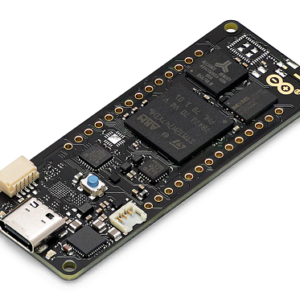
Arduino Nano 33 IOT 已焊排針 ESP32無線 / u-blox 藍芽 原廠正品 義大利製
NT$1,200 NT$1,000 未稅
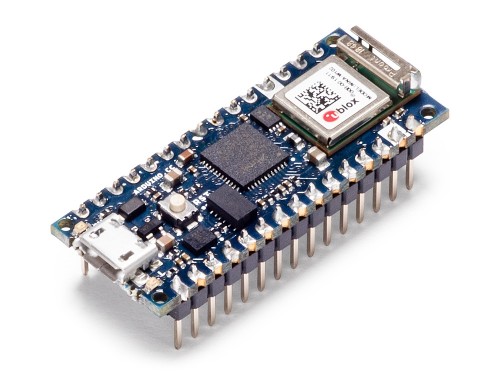
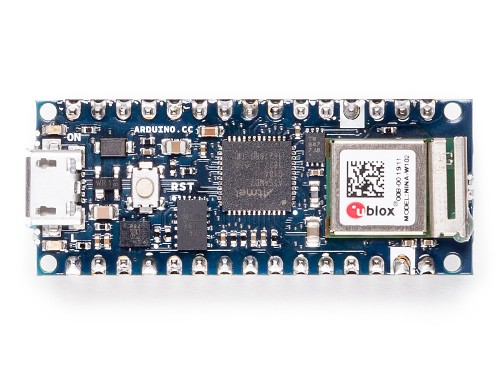
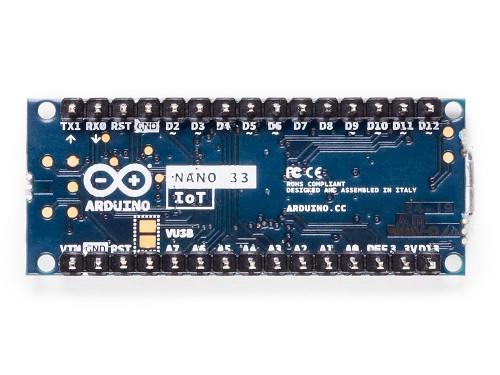
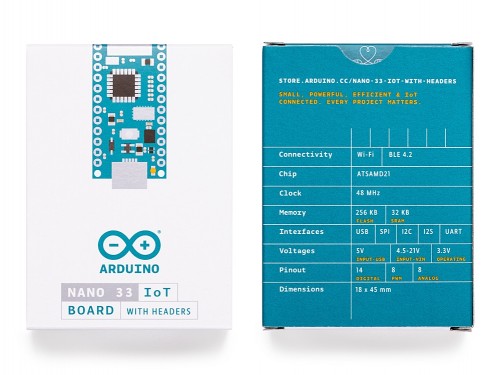
Arduino Nano 33 IoT 是增強現有設備(以及創建新設備)並使其成為物聯網的一部分以及設計微微網路應用的最簡單、最經濟的入門平台。此開發板的主處理器採用低功耗 Arm® Cortex®-M0 32 位元 SAMD21 架構。 WiFi 和藍牙® 連接採用 u-blox 的 NINA-W10 模組,這是一款工作頻率為 2.4GHz 的低功耗晶片組。
尚有庫存
- 詳細資訊
- 額外資訊
商品說明
Arduino Nano 33 IoT 是增強現有設備(以及創建新設備)並使其成為物聯網的一部分以及設計微微網路應用的最簡單、最經濟的入門平台。無論您是想建立連接到辦公室或家庭路由器的傳感器網絡,還是想創建一個將數據發送到手機的低功耗藍牙® 設備,Nano 33 IoT 都是您眾多基本物聯網應用場景的一站式解決方案。
此開發板的主處理器採用低功耗 Arm® Cortex®-M0 32 位元 SAMD21 架構。 WiFi 和藍牙® 連接採用 u-blox 的 NINA-W10 模組,這是一款工作頻率為 2.4GHz 的低功耗晶片組。此外,該開發板還透過 Microchip® ECC608 加密晶片確保安全通訊。此外,它還配備了 6 軸 IMU,這使得該開發板非常適合用於簡單的振動警報系統、計步器、機器人相對定位等應用。
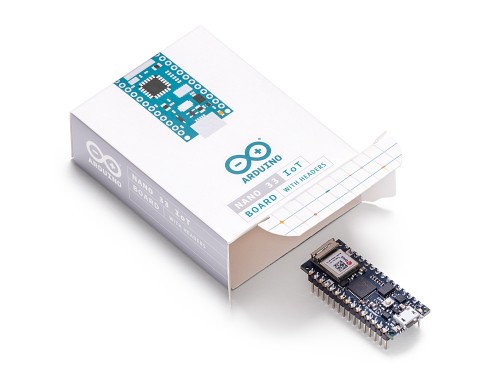
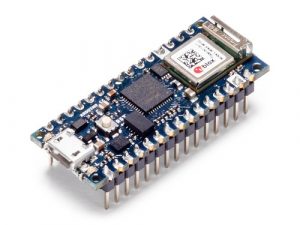
Arduino Nano 33 IoT 是增強現有設備(以及創建新設備)並使其成為物聯網的一部分以及設計微微網路應用的最簡單、最經濟的入門平台。無論您是想建立連接到辦公室或家庭路由器的傳感器網絡,還是想創建一個將數據發送到手機的低功耗藍牙® 設備,Nano 33 IoT 都是您眾多基本物聯網應用場景的一站式解決方案。
此開發板的主處理器採用低功耗 Arm® Cortex®-M0 32 位元 SAMD21 架構。 WiFi 和藍牙® 連接採用 u-blox 的 NINA-W10 模組,這是一款工作頻率為 2.4GHz 的低功耗晶片組。此外,該開發板還透過 Microchip® ECC608 加密晶片確保安全通訊。此外,它還配備了 6 軸 IMU,這使得該開發板非常適合用於簡單的振動警報系統、計步器、機器人相對定位等應用。
WiFi和Arduino IoT雲
在 Arduino,我們讓連接 WiFi 網路變得像 LED 閃爍一樣簡單。您可以將開發板連接到任何現有的 WiFi 網絡,或用它來建立您自己的 Arduino 接入點。我們為 Nano 33 IoT 提供的具體範例集,請參閱WiFiNINA 庫參考頁面。
您還可以將開發板連接到不同的雲端服務,包括 Arduino 自己的雲端服務。以下是一些如何連接 Arduino 開發板的範例:
- Arduino 專屬物聯網雲端: Arduino 物聯網雲端是一種簡單且快速的方式,可確保所有連網裝置的安全通訊。點擊此處查看en/IoT/HomePage
- Blynk:我們社區的一個簡單項目,連接到 Blynk,只需很少的程式碼即可透過手機操作您的電路板
- IFTTT:檢視建立連接到 IFTTT 的智慧插頭的深入案例
- AWS IoT Core:我們製作如何連線到 Amazon Web Services 的範例
- Azure:造訪此 GitHub 儲存庫,以了解如何將溫度感測器連接到 Azure 雲
- Firebase:如果你想連接到 Google 的 Firebase,這個 Arduino 函式庫會向你展示如何
注意:雖然上面顯示的大多數範例都在 MKR WiFi 1010 上運行,但兩個主機板具有相同的處理器和無線晶片組,這意味著可以使用 Nano 33 IoT 複製它們。
藍牙® 和低功耗藍牙®
Nano 33 IoT 上的通訊晶片組既可用作藍牙®,也可用作低功耗藍牙®用戶端和主機裝置。這在微控制器平台領域相當獨特。如果您想了解創建藍牙® 中央設備或週邊設備有多簡單,請瀏覽我們ArduinoBLE 庫中的範例。
Arduino IoT 雲端相容

在 Arduino 的 IoT 雲端上使用您的 MKR 板,這是確保所有連接事物安全通訊的簡單且快速的方法。
技術規格
Arduino Nano 33 IoT 基於 SAMD21 微控制器。
- 微控制器(MCU): SAMD21 Cortex®-M0+ 32 位元低功耗 ARM MCU
- 無線電模組: u-blox NINA-W102
- 安全元件: ATECC608A
- 工作電壓: 3.3V
- 輸入電壓(限制): 21V
- 每個 I/O 腳的直流電流: 7mA
- 時鐘速度: 48兆赫
- CPU 快閃記憶體: 256KB
- 靜態記憶體: 32KB
- 電可擦除唯讀記憶體: 無
- 數位輸入/輸出引腳: 14
- PWM腳:11(2、3、5、6、9、10、11、12、16/A2、17/A3、19/A5)
- 通用非同步收發器: 1
- SPI: D11 (COPI)、D12 (CIPO)、D13 (SCK)。使用任意 GPIO 進行片選 (CS)。
- I2C: A4(SDA),A5(SCL)
- 類比輸入引腳: 8(ADC 8/10/12 位元)
- 類比輸出引腳: 1(DAC 10位元)
- 外部中斷 所有數位引腳(所有類比引腳也可用作中斷引腳,但會有重複的中斷號)
- LED_內建: 13
- USB: SAMD21 處理器原生支持
- 慣性測量單元: LSM6DS3
- 尺寸:45毫米*18毫米
- 重量: 5 克(含針脚)
常見問題
- 電池:Nano 33 IoT 沒有電池連接器,也沒有充電器。您可以連接任何您喜歡的外部電池,只要您遵守開發板的電壓限制即可。
- Vin:此引腳可用於透過直流電壓源為開發板供電。如果透過此接腳供電,則 USB 電源會中斷。此引腳為輸入引腳。請遵守電壓限制,以確保開發板正常運作。
- 5V:透過 USB 介面供電時,此接腳會從開發板輸出 5V 電壓。注意:要使其正常運作,您需要將開發板背面的 VBUS 跳線短接。如果您透過 VIN 引腳為開發板供電,即使您焊接了橋接器,也無法獲得穩定的 5V 電壓。
- 3.3V:此引腳透過板載電壓調節器輸出 3.3V。
- LED 亮起:此 LED 連接到來自 USB 或 VIN 的 5V 輸入。
- I2C 引腳:與其他 Arduino Nano 板相反,引腳 A4 和 A5 具有內部上拉電阻,預設用作 I2C 總線,因此不建議用作類比輸入。
Arduino Nano 33 IOT 技術補充(英文)
The Arduino Nano 33 IoT is the easiest and cheapest point of entry to enhance existing devices (and creating new ones) to be part of the IoT and designing pico-network applications. Whether you are looking at building a sensor network connected to your office or home router, or if you want to create a Bluetooth® Low Energy device sending data to a cellphone, the Nano 33 IoT is your one-stop-solution for many of the basic IoT application scenarios.
The board’s main processor is a low power Arm® Cortex®-M0 32-bit SAMD21. The WiFi and Bluetooth® connectivity is performed with a module from u-blox, the NINA-W10, a low power chipset operating in the 2.4GHz range. On top of those, secure communication is ensured through the Microchip® ECC608 crypto chip. Besides that, you can find a 6 axis IMU, what makes this board perfect for simple vibration alarm systems, pedometers, relative positioning of robots, etc.
WiFi and Arduino IoT Cloud
At Arduino we have made connecting to a WiFi network as easy as getting an LED to blink. You can get your board to connect to any kind of existing WiFi network, or use it to create your own Arduino Access Point. The specific set of examples we provide for the Nano 33 IoT can be consulted at the WiFiNINA library reference page.
It is also possible to connect your board to different Cloud services, Arduino’s own among others. Here some examples on how to get the Arduino boards to connect to:
- Arduino’s own IoT Cloud: Arduino’s IoT Cloud is a simple and fast way to ensure secure communication for all of your connected Things. Check it out here
- Blynk: a simple project from our community connecting to Blynk to operate your board from a phone with little code
- IFTTT: see an in-depth case of building a smart plug connected to IFTTT
- AWS IoT Core: we made this example on how to connect to Amazon Web Services
- Azure: visit this github repository explaining how to connect a temperature sensor to Azure’s Cloud
- Firebase: you want to connect to Google’s Firebase, this Arduino library will show you how
Note: while most of the above-shown examples are running on the MKR WiFi 1010, both boards have the same processor and wireless chipset, which means it will be possible to replicate them with the Nano 33 IoT.
Bluetooth® and Bluetooth® Low Energy
The communications chipset on the Nano 33 IoT can be both a Bluetooth® and Bluetooth® Low Energy client and host device. Something pretty unique in the world of microcontroller platforms. If you want to see how easy it is to create a Bluetooth® central or a peripheral device, explore the examples at our ArduinoBLE library.
Tech specs
The Arduino Nano 33 IoT is based on the SAMD21 microcontroller.
- Microcontro:ler SAMD21 Cortex®-M0+ 32bit low power ARM MCU
- Radio module: u-blox NINA-W102
- Secure Element: ATECC608A
- Operating Voltage: 3.3V
- Input Voltage (limit) :21V
- DC Current per I/O Pin :7 mA
- Clock Speed :48MHz
- CPU Flash Memory :256KB
- SRAM :32KB
- EEPROM :none
- Digital Input / Output Pins :14
- PWM Pins :11 (2, 3, 5, 6, 9, 10, 11, 12, 16 / A2, 17 / A3, 19 / A5)
- UART: 1
- SPI: D11 (COPI), D12 (CIPO), D13 (SCK). Use any GPIO for Chip Select (CS).
- I2C: A4 (SDA), A5 (SCL)
- Analog Input Pins: 8 (ADC 8/10/12 bit)
- Analog Output Pins: 1 (DAC 10 bit)
- External Interrupts: All digital pins (all analog pins can also be used as interrput pins, but will have duplicated interrupt numbers)
- LED_BUILTIN :13
- USB: Native in the SAMD21 Processor
- IMU: LSM6DS3
- Length:45 mm
- Width: 18 mm
- Weight: 5 gr (with headers)
額外資訊
| 品牌 | Arduino |
|---|---|
| 型號 | ABX00032 |
相關商品
-
Seeed SenseCAP Indicator 開源物聯網觸控螢幕開發平台 (ESP32-S3 + RP2040) D1版本
Seeed Studio SenseCAP Indicator 是一款 3.95 吋開源物聯網觸控螢幕開發平台。搭載 ESP32-S3 與 RP2040 雙 MCU,支援 Wi-Fi、藍牙及 LoRa 通訊,適合快速開發智慧家庭 Matter 節點與資料儀表板。
NT$2,200NT$1,800 未稅 -
Seeed Grove Inventor Kit for micro:bit 發明家實驗套件組 手勢辨識 免焊接 含10種感測器
本套件已經準備了10個Grove模塊,讓您開始使用micro:bit。使用這些Grove模塊,您可以測量距離並顯示它,使用手勢播放不同的音樂,或為您的辦公桌或房間設置智能防護裝置 。
NT$2,457NT$1,900 未稅 -
Arduino Portenta H7 Lite Rev2 雙處理器 簡化版 附排針 原廠公司貨 義大利製
NT$3,500 未稅Portenta H7 Lite 擁有兩個處理器,所以Portenta H7 Lite 能同時運行高級代碼和實時任務。例如它可以同時執行 Arduino 編譯的代碼和 MicroPython 代碼,並讓兩個內核相互通信。是一個經濟實惠的開發板,專為不適合或不可能進行無線通訊的複雜環境而設計。非常適合想要利用 Portenta H7 的計算能力而無需視頻輸出或高級安全功能的開發人員。
-
Raspberry Pi Compute Module 4 (CM4) 適用於嵌入式應用的高效能運算模組
Raspberry Pi Compute Module 4 整合 Pi 4 強大功能,採用適合嵌入式應用的全新外形設計。搭載 1.5GHz 四核 CPU,支援 4K 影片、雙 HDMI、PCIe、無線網路與藍牙,是專為 OEM 打造的高效能模組。
-
SparkFun Teensy 4.1 開發板 Cortex®-M7 開發板 美國原廠
Teensy 4.1 是極受歡迎的開發平台的最新版本,具有 600MHz 的 ARM Cortex-M7 處理器、NXP iMXRT1062 晶片、比 4.0 多4倍的閃存以及兩個可選添加更多內存的新位置。 Teensy 4.1 的尺寸和形狀與 Teensy 3.6(2.4 英寸 x 0.7 英寸)相同,並提供更強大的 I/O 能力,包括乙太網路 PHY、SD 卡插槽和 USB 主機連接埠。
NT$1,400NT$1,200 未稅 -
Seeed Wio Terminal: ATSAMD51 Core with Realtek RTL8720DN BLE 5.0 & Wi-Fi & 2.4”LCD Screen1
NT$1,500 未稅Wio Terminal 與Arduino和MicroPython相容,是基於ATSAMD51的微控制器,具有Realtek RTL8720DN支持的無線連接。它的CPU速度運行在120MHz(提升到200MHz)。Realtek RTL8720DN晶片同時支持藍牙和Wi-Fi,為物聯網項目提供了骨幹。
-
DFRobot FireBeetle Board-ESP8266 WiFi 物聯網開發板 原廠
NT$360 未稅DFRobot FireBeetle螢火蟲系列是專為物聯網設計的低功耗開發元件,此款FireBeetle Board-ESP8266板載ESP8266 WiFi物聯網無線模組,它集成了TCP/IP網路協定棧,32位元低功耗MCU,10-bit精度ADC,並帶有HSPI、UART、PWM、I2C和I2S等豐富的硬體介面。
-
Seeeduino Nano 開發板 Atmega328P晶片 TYPE-C接口
Seeeduino Nano是一款基於ATmega328P微控制器的緊湊型開發板,引腳和尺寸與Arduino Nano完全兼容。它將傳統的Mini-USB升級為更方便的USB Type-C介面,並內建Grove I2C連接器,能快速串接Seeed的豐富感測器與模組,大幅簡化開發過程。
NT$367NT$240 未稅 -
SparkFun Teensy 4.0 – 600MHz ARM Cortex-M7,相容 Teensy 3.2
NT$860 – NT$960 未稅Teensy 4.0 開發板,搭載 600MHz ARM Cortex-M7 處理器,是全球最快的微控制器之一。它擁有雙核超標量架構、1024K RAM 與 2048K Flash,並支援動態時脈調整與強大的 I/O 擴充。
-
Arduino MKR WiFi 1010 開發板 – SAMD21 32位元, 雙模 WiFi+藍牙 (BLE), 內建 ECC508 加密與鋰電池充電
Arduino MKR WiFi 1010 是入門級物聯網和微微網路應用設計的入門選擇。開發板的主處理器採用低功耗 Arm® Cortex®-M0 32 位元 SAMD21 架構。 WiFi 和藍牙® 連接採用 u-blox 的 NINA-W10 模組,這是一款工作頻率為 2.4GHz 的低功耗晶片組。
NT$1,800NT$1,500 未稅